
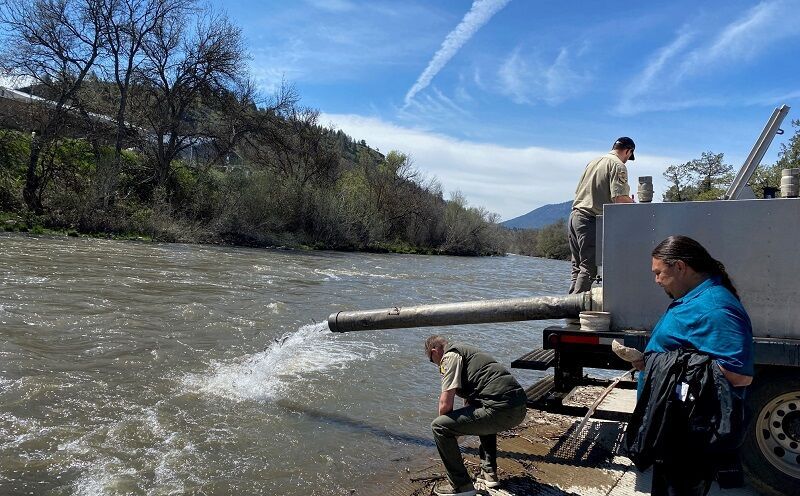
The California Dept. of Fish and Wildlife (CDFW) substantially bolstered the salmon population in The Klamath, April 16. Some 500,000 Juvenile salmon were successfully trucked from the Fall Creek Fish Hatchery in Siskiyou County and successfully transferred to just below Iron Gate Dam, in the upper Klamath.
On hand for this momentous event were leaders from the Karuk, Yurok, Shasta Indian Nation and the Quartz Valley Indian Tribes. CDFW also released about 90,000 yearling Coho salmon. The Coho are listed as both State and Federally endangered species. This release was the first major release since removal of dams began late last year.
On April 17, CDFW released 400,000 Fall-run Chinook salmon.
The Tribes expressed their satisfaction and appreciation on bringing back the Klamath to its original natural pristine status. The dams are being removed and it is anticipated salmon will soon be able to traverse the Klamath, unimpeded.
“The baby Fish represent hope,” said Yurok Tribal Councilmember Phillip Williams. “ The Klamath was mistreated for more than a century but now the River is healing and so are we. Through dam removal, habitat restoration and hatchery augmentation, we are building a brighter future for the next generation,” said Williams.
Jason Roberts, Inland Fisheries Program Manager for CDFW’s Northern Region praised the juvenile salmon release. “ These will be the first fish from the hatchery which will come back to a free-flowing Klamath River. Roberts continued, “The Coho and Chinook released last week are expected to return to an undammed Klamath in two to four years after life in the Pacific with access to hundreds of miles of new spawning and rearing habitat as a result of dam removal”
Later this Spring, CDFW will release 1.75 million Fall-run Chinook salmon molts into The Klamath, just below Iron Gage, until dam removal is complete.
The Pacific Fisheries Management Council (PFMC) has recommended DFWD ban all ocean salmon fishing for the second consecutive year due to low salmon population counts. The DFWD will consider the PFMC recommendation at its upcoming May meeting