
Update posted Jan. 17
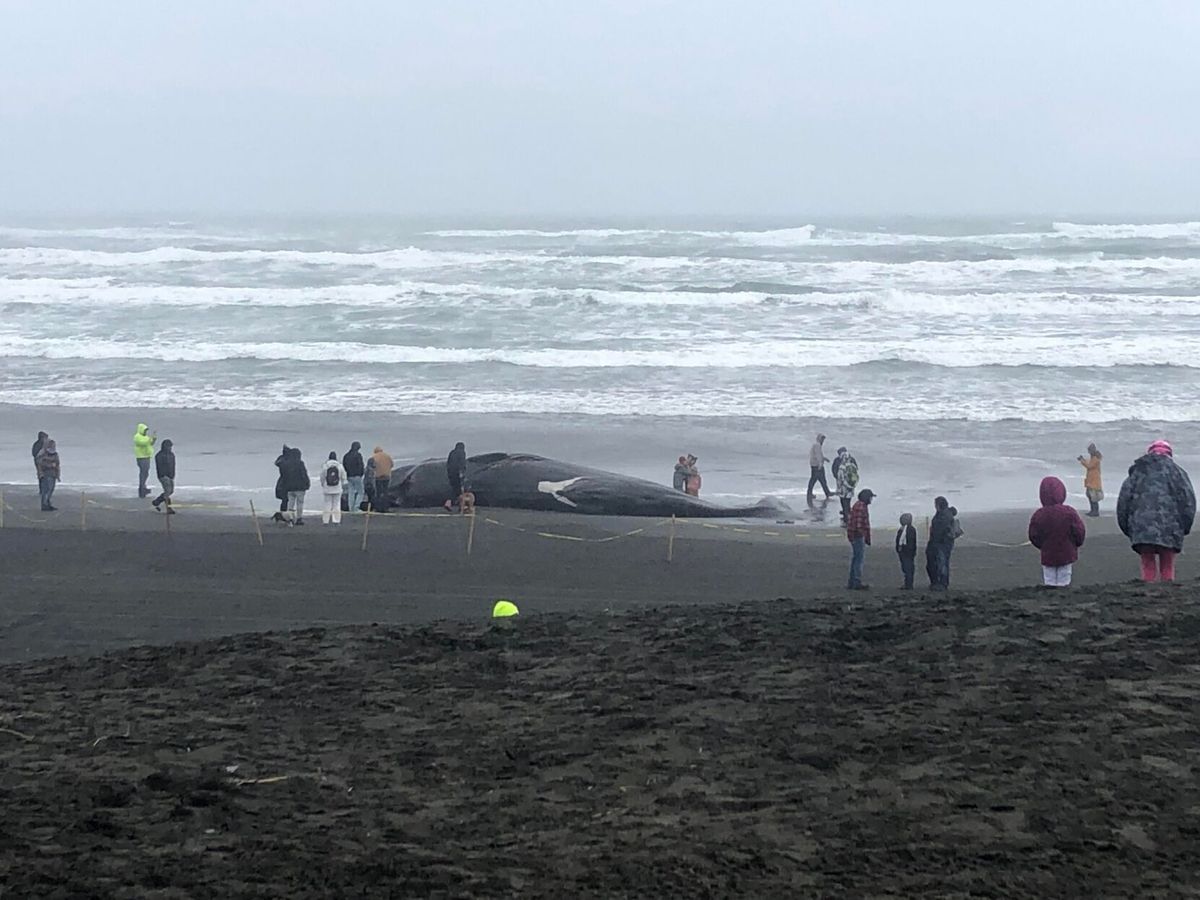
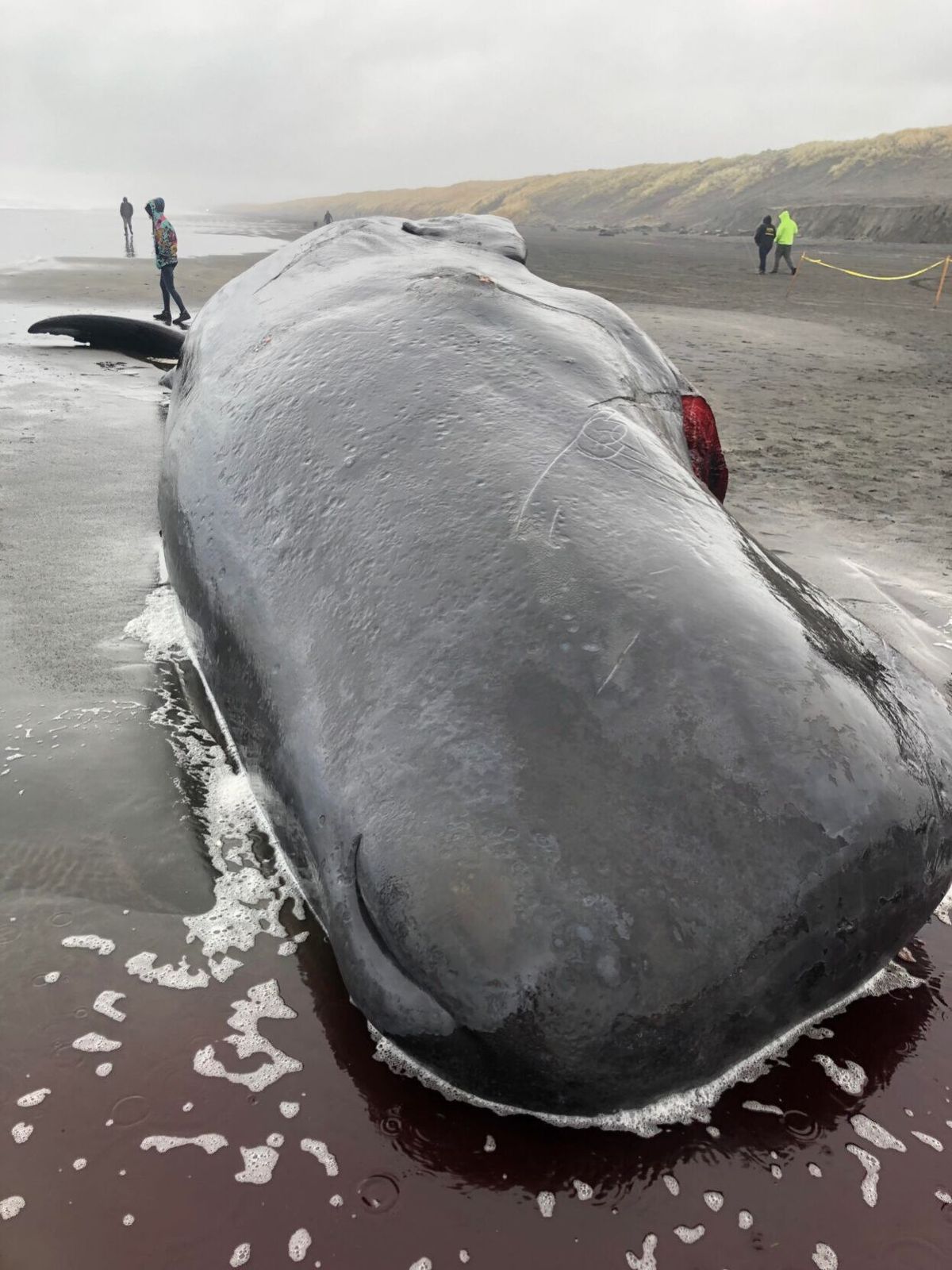
A 40-foot sperm whale beached in the sand at Astoria was killed by a ship strike.
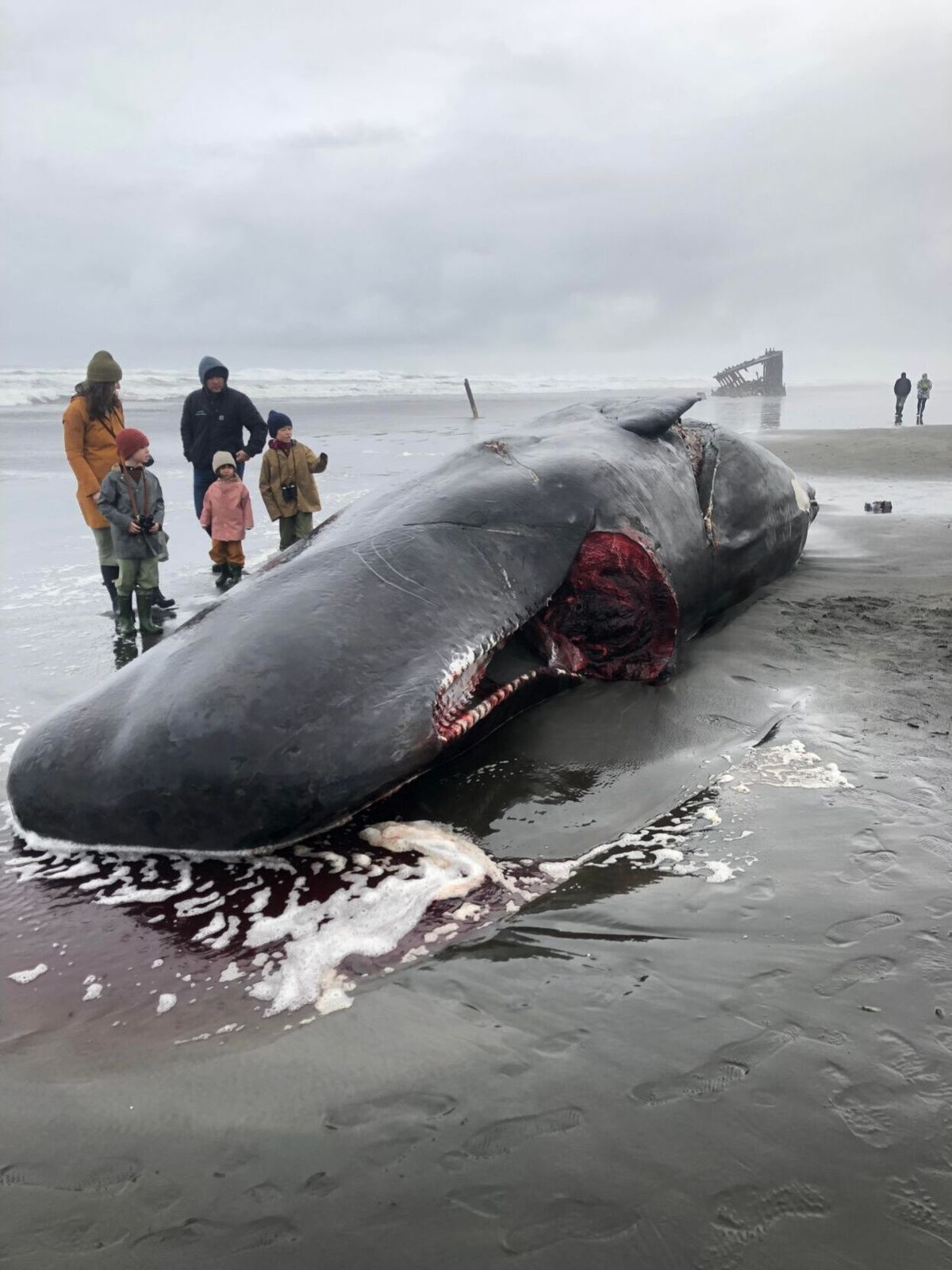
The large whale was spotted in the surf near the wreck of the Peter Iredale Saturday, Jan. 14, at Fort Stevens State Park.
The whale had been dead for a while before washing ashore, according to a Seaside Aquarium Facebook post.
"There were a few large gashes on the whale believed to be from a large ship strike, however, it is unclear if this strike occurred before or after death," the Aquarium's post stated.
A necropsy conducted Monday, Jan. 16, by biologists confirmed the cause of death, according to the Associated Press.
Previous coverage posted Jan. 16.
A 40-foot sperm whale remained beached in the sand at Astoria Monday morning, Jan. 16.
The large whale was spotted in the surf near the wreck of the Peter Iredale Saturday at Fort Stevens State Park.
The whale had been dead for a while before washing ashore, according to a Seaside Aquarium Facebook post.
"There were a few large gashes on the whale believed to be from a large ship strike, however, it is unclear if this strike occurred before or after death," the Aquarium's post stated.
A necropsy will be scheduled this week.
Crews from the Seaside Aquarium and state parks removed the whale's lower jaw.
The jaw was removed so that the teeth remained intact for scientific purposes, the Aquarium post said.
The whale is believed to be a juvenile male.
Male sperm whales can reach nearly 60 feet and weigh well over 40 tons. They have been known to live up to 60 years, with males maturing around the age of 50 at a length of approximately 52 feet. They feed on deep water species, such as squid, sharks, skates, and fish, according to the Seaside Aquarium.
While their population is recovering, sperm whales are still considered endangered.