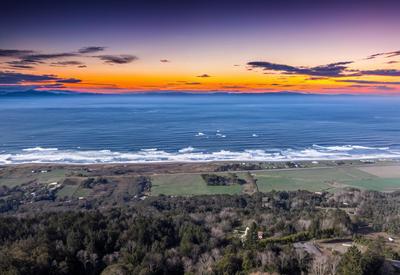
Webinar looks at human impact on coastal landscapes
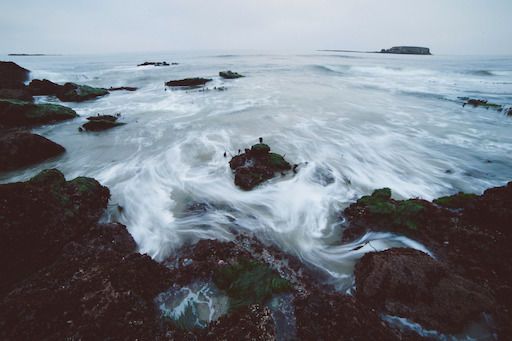
An online panel discussion, hosted by Oregon Shores Conservation Coalition Thursday, Sept. 30, discussed human impact on Oregon coastal landscapes. Moderators discussed how the coast has been transformed by human impact over the course of history to present day.
William Robbins, a professor of history from Oregon State University, discussed how market-related values reshaped the ecology and landscape of the coastal environment. This began with the Europeans’ presence becoming dominant around 170 years ago.
“On the Oregon Coast especially, there is a plethora of language groups and tribal peoples,” Robbins said. “It's that indigenous world that was relatively stable that was abruptly disrupted beginning in 1800 but especially in 1830s and 1840s.”
The reoccurring malaria epidemics, around 1830, were devastating to Native Americans along the lower Columbia River, in the Willamette Valley and in the villages on Oregon’s coastal estuaries, Robbins said. Around 90 percent of the indigenous population was killed from 1830 to 1833.
The Euro-Americans brought values of trade. In the 1840s through the 1880s, systematic changes were brought to the valley and coastal regions. Euro-Americans realized the market value of fish and timber. This led to the development of the lumber business. Saw mills were established to capitalize on timber.
“Nothing was more disruptive to weaken systems in the coast range than logging,” Robbins said. “This was especially true with the advances in technology.”
Robbins said the steam donkey, a steam-powered engine, quickened the pace of logging and increased production. He said this increased production escalated disturbances in coastal areas, including landslides and erosion. Estuaries filled over time for commercial development.
Scott Burns, professor of geology at Portland State University, discussed forestry practices and their impact on the slopes of the mountains and the sediment in the streams.
The coast is continuously moving from the Cascadia Subduction Zone, causing erosion, Burns said. Landslide sediments go into the streams. Sediment from rivers will move back and forth between headlands.
Burns said there is extensive erosion because of logging. Now, forest practices say loggers cannot log areas that are highly prone to landslides. Along the coastline, there is a better understanding of sediment movement.
As climate is warming with increased storms, there will be more landslides and sediment movement, Burns added. Congress passed the National Landslide Hazard Map and are commissioning all landslides to be mapped. With time, we will know what the problematic areas are.